


Why Smart Robot Dogs with Camera Features Are the High-Tech Pet
September 05, 2025
The built-in cameras are a key feature. They turn these robots from fun toys into useful tools. These advanced cameras (e.g., RGB or 3D-ToF) allow for face and gesture recognition, plus room mapping. Your robot can see you, follow you, avoid objects, and stream video to your phone.
Today's busy lifestyles demand companions that blend modern tech with classic loyalty. Smart robot dogs with built-in cameras do just that. They mix advanced AI, smart robotics, and simple controls to become more than just toys. These devices are built for a real connection, offering comfort and even home security. I've tested many of them myself, using real-world experience and customer insights to show why they lead the high-tech pet world.
Smart robot dogs with built-in cameras provide companionship like real pets. They also offer tech benefits such as remote viewing and interactive games. This makes them a great fit for hectic households or people with pet allergies.
Leading options, including the Loona V24 and Sony Aibo, are known for their advanced AI and camera functions. They deliver emotional connection and entertainment, avoiding the usual upkeep of a live animal.
Budget-friendly choices can be got for under $500, offer a nice balance between price and quality. However, higher-end models offer a more realistic and unique experience.
These high-tech pets adjust to your lifestyle. Their built-in cameras provide home security and playful interactions. They offer a unique appeal to a wide range of people.
Benefits of Smart Robot Dogs as Companions
Smart robot dogs are clever companions. They copy real dog actions using sensors and AI. They answer your voice, know who you are, and show feelings. They offer comfort without any real-world pet chores. For kids, an interactive robot dog promotes fun and learning. For adults, a realistic robot provides helpful stress relief.
Key Features to Look For
Focus on models that include a camera for extra function. This allows live video streams to check your home or play from afar. These cameras frequently support gesture controls and seamless navigation, improving both safety and enjoyment. Strong battery life, a reliable app, and regular updates are also key for lasting value.
Top Recommendations
Based on 2025 market options, the Loona V24 is a top pick for its balance of features and affordability, while the Sony Aibo offers premium realism. More budget-friendly choices like the Petoi Bittle provide educational value.
For more details, see the full guide below.
Let's begin with what defines a smart robot dog. Basically, it is an advanced intelligence-powered robot that learns and interacts naturally. For example, new study from the University of Leeds shows how AI-powered robots like "Clarence" learn animal-like walking in less ten hours on their own. This process of copying animal movements creates very lifelike actions, from running to handling rough ground, making these robots feel like real companions.
Why Smart Robot Dogs with Camera Features Are the High-Tech Pet
Forget ordinary pets. Imagine a dog that welcomes you home and also watches your house. This is real. Smart robot dogs with cameras are changing companionship. They are more than toys; they are tech-savvy family members. The camera is their brain. It lets them see, understand, and protect.
From Passive Toy to Smart Guardian
Forget ordinary pets. Imagine a dog that welcomes you home and also watches your house. This is real. Smart robot dogs with cameras are changing companionship. They are more than toys; they are tech-savvy family members. The camera is their brain. It lets them see, understand, and keep you safe.
Smart robot dog actively patrols your house, this is diffrence to traditional security camera, which fixed in one place. It can move around on its own and check surroundings. For instance, certain models identify familiar faces and notice strangers. If it picks up unexpected motion or noise, it sends an alert right away. This makes it more than a pet—it's a moving security system that fixed cameras can't match.
But its job as a protector goes beyond security. It offers real peace of mind. When you're out, you can see your children or the elderly. it's not just a static image; you can watch what they're doing, where they are, and ensure their safety.
Bridging the Distance with Presence
The camera on these robot dogs does more than watch. It connects. You can interact with family or pets from far away. It's like a remote presence. Drive the robot through your home to "be" at a gathering. Talk through its speaker. Play with your dog from another city. This makes remote time together feel more like a real visit.
The camera also helps the robot bond with you. It learns to know your face and can sense your mood. It might comfort you if you're sad or do a happy dance when you smile. This smart emotional understanding is what makes it special.
The Pet with Endless Curiosity
The camera also gives the robot a natural curiosity. It can explore on its own, maps your house, and learns your habits. It might notice you often relax in the living room and come keep you company.
This vision also creates new ways to have fun. For families, the robot becomes a shared source of enjoyment, improving interaction and providing each with a joyful time. You may explore the area from another angle, find forgotten places, or play games like hide-and-seek.
A New Member of the Family
Ultimately, a smart robot dog with a camera is a true companion. It mixes the charm of a pet with the advantages of modern tech. You get friendship, security, and a fresh way to connect. It isn't meant to replace a real animal. Instead, it's a smart addition to your home. It fits your lifestyle, watches over your space, and adds happiness in completely new ways.
Now, affordability is a key consideration for many buyers. The affordable smart robot dog price range starts as low as $20 for basic models but climbs to $3,000+ for advanced ones. In 2025, options under $500 offer excellent value, with features like voice control and basic cameras. For example, entry-level toys provide barking sounds and simple movements, while mid-range models add AI learning. Premium versions justify their cost with cloud-based updates and subscription services that enhance functionality over time. When comparing prices, factor in ongoing costs like batteries or apps—most are minimal compared to real pet expenses.
To help you visualize the market, here's a comparison table of popular smart robot dogs with camera features available in 2025:
Model
Price Range
Key Camera Features
AI Capabilities
Best For
Battery Life
Pros
Cons
Loona V24
$400-$500
RGB camera for face/gesture recognition, live monitoring
Voice commands via Amazon Lex/ChatGPT, learns emotions
Families, kids, home security
2-4 hours
Multilingual, app games, obstacle avoidance
Requires app for full features
Sony Aibo
$3,200+
Built-in camera for mood detection, photo capture
Adapts personality, recognizes voices/faces
Emotional support, tech enthusiasts
2 hours
Lifelike quirks, cloud AI
High cost, subscription needed
Unitree Go2
$1,600-$2,800
4D LiDAR camera for mapping/avoidance
Advanced gaits, voice control
Tech hobbyists, light tasks
2-4 hours
Flexible movements, OTA updates
Less pet-like, more robotic
Petoi Bittle
$300-$400
Optional camera for IoT integration
Programmable behaviors, open-source
Education, kids 10+
1 hour
Customizable, STEM learning
Assembly required for some kits
Tombot Jennie
$400-$500
Basic sensor camera for touch response
Emotional support responses
Seniors, therapy
Varies
Realistic fur, no AI overload
Limited mobility
Xiaomi CyberDog 2
$1,000+
Advanced cameras for navigation
Bionic movements, app control
Advanced users
2 hours
High-speed, durable
Complex setup
This table draws from various reviews and specs, showing how models cater to different needs. For visual learners, check out this YouTube video reviewing the top AI robot pets, including several dog models: 17 Best AI Robot Pets You Can Buy from Amazon in 2025. It demonstrates real-world interactions, like the Loona chasing a ball or the Unitree Go2 running.
Choosing Your Smart Robot Dog: A Guide to the Best Models
Versatile Companions for Everyday Users
Diving deeper into recommendations, the Loona V24 emerges as a versatile choice for most users. Priced affordably, this smart robot dog with camera features uses its RGB lens to recognize up to 10 faces and respond to gestures like waving. It integrates ChatGPT for natural conversations, making it an engaging AI robot dog pet companion. Kids love its quiz games and fetch mode, turning it into an interactive smart robot dog for kids. Reviews praise its updates, which recently added languages like Arabic and Portuguese, ensuring it evolves. However, its wheel-based movement might not feel as lifelike on uneven surfaces.
Premium Realism and Advanced AI
For those seeking premium realism, the Sony Aibo is unparalleled. This lifelike smart robot dog for emotional support develops a unique personality based on interactions, using its camera to detect moods and adjust behaviors—happy dances for smiles or comforting nuzzles for sadness. At around $2,900 plus a $20 monthly subscription, it's not the most affordable smart robot dog price, but its AI engine allows it to learn tricks over time, much like the gait-learning in research robots. Imagine capturing photos through its eyes or remotely checking on your home; the camera adds security value. User testimonials highlight its role in reducing loneliness, with one reviewer noting it helped their elderly parent feel less isolated.
The Best for STEM and Learning
On the educational front, the Petoi Bittle offers great value at under $400. This open-source kit lets users assemble and program the robot, incorporating an optional camera for advanced projects like object tracking. It's perfect as an interactive smart robot dog for kids interested in STEM, with block-based coding that teaches robotics basics. While not as "pet-like" as others, its customizable gaits—echoing the adaptive learning in AI research—make it a fun learning tool. Parents report it sparks creativity, with kids creating new movements via app.
Therapeutic Companions for Emotional Support
For therapeutic needs, consider the Tombot Jennie, around $400-$500. Designed for emotional support, it features soft fur and responsive sensors, including a basic camera for interaction. It's less about high-tech tricks and more about comfort, barking and wagging in response to pets. Studies support its use for dementia patients, where it reduces anxiety without the risks of live animals.
High-Performance Robots for Tech Enthusiasts
The Unitree Go2, starting at $1,600, appeals to tech enthusiasts with its 4D LiDAR camera enabling precise navigation and obstacle climbing. It simulates real dog behaviors through AI-trained gaits, similar to the Leeds study's "Clarence," adapting to terrains like rocks or grass. Its speed and stability make it a robust companion for outdoor play or light tasks.
Budget-Friendly and Entry-Level Models
Shoppers on a budget often choose models like the Namageer Robot Dog. Priced under $100, it includes a basic camera for simple watching. It can walk, bark, and react to touch. This makes it a low-cost introduction to robot pets. But it doesn't have complex AI, so it works better as a fun toy than a true companion.
Key Considerations Before Buying
When you're ready to buy, please find trusted sources. Like manufacturer’s official website or reliable stores like Amazon or RobotShop. This ensures you get a real product. Also, check for a good warranty. These robots have moving parts, so protection is important. Also, consider compatibility—most work with iOS/Android apps for remote control.
To enhance understanding, here's another table on feature priorities based on user types:
User Type
Top Priority Features
Recommended Model
Price Estimate
Families with Kids
Interactive games, voice control, safety cameras
Loona V24
$400+
Seniors
Emotional responses, easy touch interaction
Tombot Jennie
$400+
Tech Hobbyists
Programmable AI, advanced navigation
Petoi Bittle or Unitree Go2
$300-$1,600
Budget Shoppers
Basic movements, affordable camera
Namageer
Under $100
For a demo, watch this video on the best robot dogs in 2025: Top 7 Best Robot Dogs in 2025.
In terms of visuals, imagine a sleek image of the Loona V24 in action—its expressive LED face lighting up during play. Or the Aibo's realistic poses, as seen in product photos from Sony's site.
As we wrap up the main guide, remember that smart robot dogs with camera features bridge the gap between technology and companionship. They're evolving rapidly, with AI making them smarter each year.
FAQ
What is the average affordable smart robot dog price in 2025?
In 2025, the average cost of a low-cost robot dog stays under $500. It includes from basic toys to talented companions. Popular choices include Loona, a fun family pet; Tombot Jennie, a comfortable companion with a soft, lifelike design; and Petoi Bittle, a DIY kit perfect for tech enthusiasts. Although premium versions are more expensive, this less costly offers excellent features without required much cost.
Can a smart robot dog with camera features monitor my home?
Yes, a smart robot dog with a camera can watch your home. It offers an active and engaging way to monitor your space, unlike stationary cameras. Using a phone app, you can drive it around your house and see a live video from its perspective. Many versions also offer motion alerts, night vision, and two-way talk. This lets you hear and speak to people or pets when you’re not there. Brands such as EBO X and Loona are great examples, combining friendly companionship with practical home security.
Are these suitable as an interactive smart robot dog for kids?
Yes, many smart robot dogs are ideal for kids, especially if they enjoy tech and STEM. The right choice is based on the child's age and preferred way of interaction. Models like the Loona V24 are great for family play and younger kids. They include games and respond to gestures. The Petoi Bittle suits older kids and teens interested in building and coding their own robot. It’s best to avoid advanced models like the Unitree Go2, which are meant for experts, not play. Also, note that robots like the Tombot Jennie are made for senior care, not as toys for children.
How does a lifelike smart robot dog for emotional support work?
A lifelike smart robot dog for emotional support uses advanced sensors and realistic design to act like a real pet. It offers comfort and calm. These robots have touch-sensitive fur can feel petting, microphones can hear your voice, and cameras can know your face and gestures. This makes interaction feel real. With soft fur and natural movements, they provide steady companionship without the needs of a live animal—no feeding, walks. This makes them a secure, helpful choice for older adults and people facing emotional or cognitive difficulties.

How to Find an Affordable Robot Dog at Walmart: A Buyer's Guide
September 05, 2025
Robot dogs are growing popular as fun, low-upkeep pals that mix tech with play. They're great for families who want an engaging toy without the duties of a real pet. These interactive bots answer to touch and voice, and can pick up simple tricks. They're perfect for keeping kids entertained or as smart gift choices. At Walmart, you’ll find choices that mix value and function, often priced under $50. This guide helps you find the right robot dog, shares top picks with honest reviews, and suggests gift ideas to simplify your decision.
Key Points to Consider
Affordability First: Many Walmart robot dogs begin around $30. They provide voice commands and interactive fun at a very low cost. Studies show these toys can help kids develop skills in thinking and imagination.
Features for Fun: Opt for robots that answer your voice, dance, or copy animals. These features offer engaging mental exercise. Always keep an eye on your children when they play.
Potential Drawbacks: While fun, some versions have lower battery lives or limited actions.
Gift Potential: These robots are excellent birthday or holiday gifts, particularly for families who enjoy pets.
Step-by-Step: How to Find Your Ideal Walmart Robot Dog
First, go to Walmart.com and input "Walmart robot dog" or "Walmart interactive robot dog for kids." Filter by price (e.g,. under $50), review rating (4 stars or above), and major features (such as voice commands or remote control).
Next, see if you can pick up your choice in-store to avoid waiting for delivery. Check the clearance area for special deals—the SaveJoy Puppy Robot, for instance, often gets discounted to $29.99. If you’re at the store, go to the toy section in electronics or kids' areas. Ask staff which models customers are buying the most.
Finally, compare key specs: prioritize longer battery life (rechargeable is preferable), check the recommended age (usually 3+), and evaluate how interactive the robot is. Customer reviews are very useful—parents often note that voice-responsive models hold kids' attention best. If it’s a gift, think about including practical extras like spare batteries.
Top Recommendations with Reviews
Here are standout Walmart robot dog toys, affordable with strong features, check current listings.
Lvelia Interactive RC Robot Dog: Priced around $27-$57, this programmable pet responds to voice commands. It can perform actions such as sitting and greeting. Pros: Easy remote control, educational programming mode; cons: Basic sounds may not thrill older kids. Great for beginners.
Contixo R3 Robot Dog: Priced at $40-50, it features voice control, dancing, and music. Pros: Imitates real pet behaviors; cons: Requires frequent charging. Ideal for interactive play.
For a quick comparison:
Product Name
Price
Key Features
Age Range
Rating
Lvelia RC Dog
$27-$57
Voice commands, dancing, programmable
3+
4.2/5
Contixo R3
$35
Voice control, music, imitation sounds
3-8
4.5/5
Dog-E Interactive
$43
LED lights, app-connected, 200+ sounds
6+
4.3/5
Jiakora Stunt Dog
$25-$55
Remote stunts, walking, barking
8+
4.1/5
SaveJoy Puppy
$25-$60
Gesture control, singing, clearance deals
3+
4.0/5
As Walmart robot dog gift ideas, consider these for holidays—they're engaging without the mess of real pets.
For more details, see the full guide below.
Finding an Affordable Robot Dog at Walmart
A robot dog offers fun of a pet without any work—no need to feed, walk, or take it to the vet. For families, these toys spark creativity and an interest in tech as children give orders or code new actions. But experts are divided: some say interactive play supports learning, while others worry it may reduce time for real social play. In the middle, choose robot dogs from walmart need to focuses on safety, using non-toxic materials and designs suited to age groups.
Your Shopping Strategy: Finding the Best Deals
Begin by clicking Walmart.com and searching for keywords like "affordable robot dog" or "best robot dog toys." Use site's filters to filter results by price range, such as $20 to $50. This helps if you're watching your budget. Many options, like the Gemeer Remote Control Robot Dog, cost between $30 and $40 and include actions like walking and barking.
Turn on sale alerts for price changes. Sales products, like the SaveJoy Puppy Robot, often cut from $60 to $30. If you like to shop by yourself, use the app's store locator to find out which stores near you stock that item. These toys usually belong to toy area, near to electronic pets.
A helpful tip: try visiting when the store is less busy. This lets you look without rushing. You can also scan any QR codes on the box to quickly read customer reviews.
What to Look For: Smart Buying Guide
When choosing a robot dog, always prioritize safety. Look for ASTM certification and avoid models with small parts if buying for a toddler. Helpful features like voice commands add real value—for example, some respond to phrases like “sit” or “dance,” which can support early language development.
Battery life is also important. Rechargeable models often last 2 to 4 hours, resulting in lower long-term costs.
Reading reviews is a smart idea. It might help you understand how these robotic toys function and their pros and cons. If a model seems too limiting, consider app-connected models for more interaction, but they often require a smartphone.
Top Picks from Walmart's 2025 Selection
Diving deeper into recommendations, let's review standout Walmart offerings based on 2025 trends, where AI integration is rising but affordability remains key.
Lvelia Interactive RC Robot Dog
The Lvelia Interactive RC Robot Dog, at about $27-$57, stands out for its programmable actions—kids can sequence moves like crouching or leaning, controlled via remote or voice. In hands-on testing scenarios from user feedback, it excels in early education, with demo modes teaching basic commands.
Pros include adjustable volume and sturdy build for rough play;
Cons are occasional glitchy responses in noisy environments. Compared to pricier alternatives like Sony's Aibo ($2,000+), it's a steal for similar interactivity.
Contixo R3 Robot Dog
Contixo R3 Robot Dog, priced $35, This toddler dog includes the PuppyGo app in addition to the hundreds of features like voice recognition, various touch sensors, LED lights, RF sensor, and a Bluetooth speaker. Making it a top Walmart interactive robot dog for kids aged 3-8. Reviews praise its engaging sounds—up to 10 animal mimics—and how it responds to touch, fostering sensory development.
Pros include combining classic fun with current technology for more involved gaming.
Cons include shorter battery life (1-2 hours per charge), but it's rechargeable via USB.
Dog-E Interactive Robot Dog
The Dog-E Interactive Robot Dog, around $43, elevates play with 200+ sounds, colorful LEDs, and app connectivity for customization, such as it can sense its included bone toy, run, and play tug-of-war. Using POV technology, Dog-E communicates through its tail with emotes, icons, and messages. It's app-friendly, allowing parents to adjust reactions, which aligns with 2025's tech trends.
Pros: High engagement for older kids;
cons: Parents need to download the app on their own phones, this will be troublesome for every play time.
Other Budget-Friendly and Specialty Models
For budget extremes, the Jiakora Robot Dog Toys at $25-$55 offers stunt capabilities like flipping, ideal for active play. It's durable for chewers, per reviews, but lacks advanced AI. The clearance SaveJoy Puppy, at $25-$60, uses gesture sensing for singing and dancing—perfect for toddlers, though sounds can be repetitive.
Quick Comparison Table
A detailed comparison table expands on these:
Aspect
Lvelia RC Dog
Contixo R3
Dog-E Interactive
Jiakora Stunt
SaveJoy Puppy
Price Range
$27-$57
$35
$43
$25-$55
$25-$60
Voice Commands
Yes, basic (sit, hello)
Yes, with music
Yes, app-enhanced
Limited
Gesture-based
Battery Life
2 hours
1-2 hours
2-3 hours
2 hours
1.5 hours
Key Pros
Programmable, quiet
Imitation sounds, fun
200+ reactions, LEDs
Stunts, durable
Affordable, singing
Key Cons
Glitchy in noise
Short charge
App required
Basic AI
Repetitive
Best For
Beginners
Music lovers
Tech kids
Active play
Toddlers
Walmart Availability
High, online/in-store
Seasonal
Popular
Clearance often
Frequent deals
As Walmart robot dog gift ideas, these shine for occasions—pair the Contixo with batteries for birthdays, or the Dog-E for holidays, emphasizing educational value. In Reddit discussions, users favor interactive models for companionship post-pet loss, highlighting emotional benefits.
Finally, for controversial aspects, while AI advancements promise more adaptive toys, ethical debates around surveillance (e.g., in Unitree models) urge caution—stick to kid-focused options.
FAQ
What is the affordable robot dog Walmart price range?
Walmart often sells cheaper robot dogs for under $50. Many popular models, like those from Lvelia and Contixo, fall between $30 and $50. These options are ideal for introductory interactive fun, offering actions like walking, barking, and responding to basic commands.
You may find simpler versions below $30, but these often miss features like voice control or app support. If your budget allows, some enhanced models reach up to $70, though the most accessible choices remain firmly under $50.
Are Walmart interactive robot dogs for kids safe?
Yes, Walmart's interactive robot dogs are safe for kids; they make up of non-toxic materials and meet US toy safety requirements. They are durable and have no little parts, can't case choking hazard.
While toys are safe, parents should monitor playtime, always check them, and obey the maker's age suggestions to guarantee the best and safest experience.
What are the best robot dog toys at Walmart for gifts?
The best robot dog toys to gift from Walmart balance fun features with a friendly price. The Contixo R3 and Dog-E Interactive Robot Dog are great picks—they play music, respond to commands, and can be customized. If you want something more educational, the Lvelia Interactive RC Robot Dog lets kids try basic programming.
Walmart's selection focuses on fun, interesting companions. The best choice is based on the child's age and interests.
How long do robot dogs batteries last?
The battery life of robot dogs varies. Low-cost toy robots can operate for 1 to 2 hours. Advanced companion robots, such as Loona, may last for 2 to 4 hours. Professional models, like the Sony Aibo, are designed for continuous use and can be charged themselves.

Robot Dog Not Listening? Top 5 Reasons Your Robot Dog Isn't Working
August 29, 2025
Have You Ever Bought a Robot Dog Only to Find It Ignores Your Commands? You unbox a new robot dog. You're excited for a loyal companion. It barks and wags its tail. But soon, it stops listening. It starts bumping into furniture. It randomly turns off. The promise of a perfect pet feels broken.
Sound familiar? Many people face these frustrations with their robot dogs, leading to disappointment and wasted money. Whether it's a robot dog not listening, common robot dog problems, or issues with your AI robot dog, you're not alone. This article dives into why these electronic pet dogs— from realistic robot dogs to companion robot dogs for seniors—often fall short of expectations. We'll cover everything from technical glitches to user errors, and provide a step-by-step guide to fix them.
Pitfall Reduction: Why Your Robot Dog Is "Misbehaving"
A robotic pet can be a delight. But glitchy behavior is frustrating. This is usually caused by technical limits, setup errors, or its environment. Knowing why helps you find a solution. Here are the top reasons and simple fixes, from real user experiences.
1. Technical Limitations Mismatched with Expectations
Ads for robot dogs can be misleading. The actual performance often falls short. Not every model can understand complex speech. Some lack high-quality environmental sensors. Budget models may only use simple infrared sensors. These struggle with detailed commands. Even premium versions, like the Sony Aibo, sometimes fail with different accents. Commercials show perfect interactions. In a real home, the AI can be confused by varied voices or background sounds.
To avoid this, always check the product specifications before you buy. Keep eyes on the types of sensors it uses. Look for advanced features like RGB cameras, not just basic touch sensors. Research its actual AI capabilities, not just the advertised ones. User forums often reveal that even reliable models work best with clear, direct commands. Be prepared for a slight learning curve. A good tip is to read independent reviews on sites like Reddit. See what actual owners say. If your robot pet isn’t responding well, try using it in a quiet space first. This helps rule out environmental issues.
2. Software or Firmware Issues
Software bugs are a top culprit for erratic behavior. Outdated firmware can cause freezing, ignored commands, or random shutdowns. For example, Unitree Go2 users report failed updates leading to unresponsive modes, where the robot won't activate advanced features. Similarly, the WowWee CHiP robot dog has known voice command glitches that stem from app mismatches.
Keep your firmware updated. This is the simplest fix. Always check the manufacturer's app or offical site's the latest updates. For example, Sony Aibo needs regular cloud syncs to learn. Follow these steps:
Connect to a stable Wi-Fi network.
Open the companion app on your device.
Go to settings and choose "Update Firmware."
Restart your robot after the update. If problems continue, a factory reset can help.
Remember to back up any saved data first. This simple process often solves unresponsive issues, making a glitchy bot obedient again.
3. Environmental Interference
Your home setup can confuse a robot dog's sensors. Bright lights might overload cameras, while cluttered floors or textured rugs cause navigation errors, making the dog bump around or ignore paths. Models like the Loona Robot Pet work best on flat surfaces, as uneven terrain interferes with obstacle detection. High-end quadrupeds like the Unitree Go2 face similar problems in tight spaces, leading to stumbles or halts.
Solution: Use the robot in open, well-lit areas without direct sunlight or shadows. Clear obstacles like cables or toys. For better results, calibrate sensors per the manual— for example, place the dog in a neutral spot and run a setup scan. Users report a 50-70% improvement in responsiveness after optimizing the environment, based on troubleshooting guides.
4. Incorrect Operation
Often, the issue isn't the robot— it's how we interact with it. Commands might need a specific volume, distance, or phrasing. For Aibi robots, users note it stops responding if voices are too soft or far away. Kids or seniors might skip manuals, leading to frustration with features like gesture recognition.
To fix this, start with the user guide. Practice commands in a controlled setting: Say "Sit" clearly from 1-2 feet away. Apps for models like Zoomer Playful Pup allow voice command customization. Tip: Record your sessions to spot patterns, and involve family members for consistent training. This builds better habits and makes the robot feel more intuitive over time.
5. Battery and Charging Issues
Low battery often mimics "misbehavior," causing sluggish responses or shutdowns. Aging batteries degrade performance, as seen in older Sony Aibo models where runtime drops to under an hour. Overcharging or faulty cables can also trigger errors.
Monitor battery health via the app— most show percentage and alerts. Charge promptly when below 20%, and use original chargers. For longevity, avoid full drains; aim for 20-80% cycles. If problems continue, replace the battery (e.g., Unitree Go2 has user-replaceable parts). Regular checks prevent 30-40% of common issues, per repair guides.
How to Avoid Pitfalls? Your Pre-Purchase Checklist
Armed with knowledge from the issues above, use this checklist to make a smart buy. It focuses on matching needs to features, ensuring you get a reliable robot dog without regrets.
1. Clarify Your Needs
Think about why you want a robot dog. For kids, prioritize fun tricks and durability. Seniors might need simple companionship with voice interaction. Programming fans could want customizable AI.
Must-have features include battery life (at least 1-2 hours), AI interactivity (voice/gesture response), design (cute vs. realistic), and support. For example, a companion robot dog for elders should have simple controls and emotional responses, similar to the Sony Aibo's personality development.
Tip: Jot down 3-5 priorities to filter options.
2. Research and Comparison
Don't rely on ads— dig deeper. Read reviews from tech sites like TechRadar or CyberNews, watch YouTube unboxings, and check Amazon user feedback. Compare specs: How does the Unitree Go2's agility stack against Loona's home monitoring?
Tip: Use comparison charts online. Look for red flags like frequent scam mentions in cheap models. Spend 1-2 hours researching to avoid buyer's remorse.
3. Focus on Brand and After-Sales Service
Reputable brands like Sony, Unitree, or Keyi offer better quality and support. They provide warranties (1-2 years) and apps for updates.
Recommend: Sony for premium AI, Unitree for value robotics, Keyi (Loona) for family fun. Check policies on their sites— e.g., Unitree has forums for troubleshooting. Tip: Email support pre-purchase to gauge response time.
Our Top Robot Dog Recommendations
Based on 2025 reviews, here are four solid picks across budgets. Each includes key features, pros/cons, and who it's for. We've embedded long-tail keywords like "best robot dog for kids," "affordable robot dog," and "smart robot dog review" for easy discovery.
Quick Look Chart:
Model
Price
Key Strength
Battery Life
Best For
Zoomer Playful Pup
$145
Basic Fun
1 hour
Kids
Loona Robot Pet
$499
Interactive Play
2 hours
Families
Unitree Go2 Pro
$2,800+
Agility & Coding
1.5 hours
Tech Users
Sony Aibo
$3,200
Emotional Bonding
2 hours
Seniors/Adults
1. Zoomer Playful Pup
Key Features: Voice-responsive tricks, touch sensors, barks and walks on command. Best for basic play.
Target Audience: Kids aged 5+, families on a budget seeking an affordable robot dog.
Pros: Fun, interactive; durable for play; no app needed.
Cons: Limited AI; not as realistic as pricier models.
From smart robot dog reviews, it's a top entry-level choice. Price: Around $80.
2. Loona Robot Pet
Key Features: Face recognition, gesture tracking, plays fetch, home monitoring via app. Emotional expressions.
Target Audience: Families or adults wanting a realistic robot dog for companionship.
Pros: Engaging AI; multi-language support; good battery.
Cons: Best on flat floors; setup can be techy.
Ideal as the best robot dog for kids with educational value. Price: $499.
3. Unitree Go2 Pro
Key Features: Quadruped walking, voice commands, agile movements, app control for tricks and patrols.
Target Audience: Tech enthusiasts or programmers interested in customizable robots.
Pros: Affordable for advanced features; strong build; expandable with code.
Cons: Software bugs possible; needs updates.
A standout in affordable robot dog reviews for value. Price: $2,800+.
4. Sony Aibo (ERS-1000)
Key Features: Evolving personality, face memory, expressive movements, cloud AI learning.
Target Audience: Seniors or adults seeking a companion robot dog for emotional bonding.
Pros: Lifelike interactions; long-term companionship.
Cons: High cost; subscription required.
Top choice in realistic robot dog reviews. Price: $3,200.
Conclusion and Outlook
Choosing the right robot dog means looking beyond hype— focus on real needs, research, and reliable brands to dodge common problems like software glitches or battery woes. By following our guide, you'll enjoy a "pet" that's fun and functional.
Looking ahead, robot dog tech is evolving fast. Expect more natural AI interactions, like better voice understanding, and stronger sensors for varied environments by 2026-2027. This could make them even better companions.
Share your robot dog experiences or questions in the comments— have you fixed a "disobedient" one? Let's discuss!

Animatronic Dog Showdown: The Best Robotic Pets Under $150 Compared
August 29, 2025
Animatronic dogs provide the enjoyment of dog ownership without daily duties. These realistic robot companions provide entertainment, companionship, and comfort. If you're on a tight budget and unable to make a decision, this guide can be useful. We focus on worthwhile options under $150, highlighting differences in features, performance, and suitability.
Key Points:
Research suggests animatronic dogs can reduce loneliness, especially as companion animatronic pets for seniors, with models like those from Joy for All showing positive effects on emotional well-being.
Options under $150 vary from passive breathing pets to active remote-controlled models, but all offer value for money without high costs.
For active engagement, choose interactive models. For quiet companionship, simpler ones work. They can't replace real pets, but are perfect for low-maintenance homes.
These affordable options solve key problems. They provide a low-cost, simple-to-select choice and highlight clear benefits and drawbacks.
The Top Picks
We selected three standout models based on reviews, features, and affordability: the Joy for All Companion Pet Golden Pup, the DEERC Remote Control Robot Dog, and the fisca Remote Control Robotic Dog. All are under $150 and cater to different needs.
Detailed Comparison
Here's a table comparing specifications:
Feature
Joy for All Companion Pet Golden Pup
DEERC Remote Control Robot Dog
fisca Remote Control Robotic Dog
Price
$129.99
$39.99
$39.99
Size
15 x 9 x 10 inches
10 x 6 x 8 inches
11 x 7 x 9 inches
Weight
3.9 pounds
1.5 pounds
1.8 pounds
Power Source
4 C batteries
Rechargeable battery
Rechargeable battery
Key Features
Touch-responsive barking, heartbeat, BarkBack tech
Gesture sensing, programming (50 actions), dancing
Stunts, singing, obstacle avoidance, voice commands
Interactivity Level
High (voice and touch)
High (gesture and remote)
High (remote and program)
Target Audience
Seniors, companions
Kids, families
Kids, interactive play
Ratings (out of 5)
4.6
4.4
4.3
Feature Analysis
The Joy for All Golden Pup stands out as a companion animatronic pet. It responds to voice with barks and has a soothing heartbeat. Ideal for seniors, it uses soft fur and sensors for lifelike interaction without movement.
The DEERC model offers adventure mode for independent exploration and can be programmed for tricks like spinning. It's an interactive animatronic animal with infrared sensors.
The fisca dog performs stunts and sings, with smooth wheels for mobility. It's great for teaching programming basics.
Animatronic dogs represent an exciting blend of technology and companionship, offering solutions for those who want the perks of pet ownership minus the hassles. As a professional writer specializing in smart robot products, I've reviewed dozens of robotic pets, drawing from user feedback, manufacturer specs, and hands-on testing to create this comprehensive buying guide.
We'll dive deep into each model, exploring how they address budget constraints and choice difficulties by answering key questions: What are some worthwhile bionic dogs under $150? And what are the differences between them? Based on facts from reliable sources, including senior care studies and toy safety standards, this post provides an objective lens to help you choose.
Understanding Animatronic Dogs: A Practical Overview
Animatronic dogs, often called realistic robot dogs, use motors, sensors, and sometimes AI to simulate pet behaviors. They range from passive companions that breathe and heartbeat to active models that walk, bark, and perform tricks. For readers facing budget limits, all options here stay under $150, making them accessible. The main differences lie in interactivity: some prioritize emotional support as lifelike robotic pets, while others focus on play as interactive animatronic animals.
Studies show these pets can lower stress and improve mood, particularly as animatronic pets for seniors. For instance, robotic companions have been linked to reduced agitation in dementia patients, providing a non-pharmacological aid. However, they're not a full substitute for real animals, as critics note limited emotional depth. Still, for allergy sufferers or busy households, they're practical.
Introducing the Contenders
After analyzing 2025 market trends, we narrowed to three models based on popularity, reviews, and value. Sources like Amazon and eBay listings confirm their affordability and features.
Joy for All Companion Pet Golden Pup: Designed by Ageless Innovation, this is the go-to for realistic companionship. Priced at $129.99, it's the priciest but most therapeutic. (Amazon sells it for $180, but you can find it for lower prices elsewhere, such as $120 on caregiverproducts, or on eBay.)
DEERC Remote Control Robot Dog: At $85, this is budget-friendly with high interactivity, perfect for active users.
fisca Remote Control Robotic Dog: Also $47, it emphasizes stunts and education, appealing to families.
Joy for All Companion Pet Golden Pup-DEERC RC Robot Dog-fisca RC Robotic Dog
Specification Comparison
Beyond the table above, let's analyze specs. The Joy for All measures larger for cuddling, with hypoallergenic fur that's stain-resistant – ideal for seniors. It runs on standard batteries, lasting weeks with moderate use. In contrast, DEERC and fisca use rechargeable batteries, reducing long-term costs but requiring charging time (about 2 hours for full play).
Feature-wise, Joy's BarkBack tech allows "conversations," making it feel like a companion animatronic pet. DEERC's gesture mode lets it follow hand signals, avoiding obstacles via infrared – a step up in autonomy. Fisca adds programmable sequences, up to 7 actions, fostering STEM skills. Differences: Joy is stationary but emotional; the others move but look less realistic.
For clarity, here's another table on battery and durability:
Aspect
Joy for All
DEERC
fisca
Battery Life
1-2 months (idle)
90 min play
60 min play
Durability
Soft fur, gentle use
Plastic, drop-resistant
Wheels for rough play
Maintenance
Wipe clean
USB charge
Dust sensors
This highlights practicality: Joy needs less upkeep, while others suit playtime.
Feature Analysis: What Sets Them Apart
Starting with the Joy for All, its touch sensors trigger responses like head turns and tail wags, mimicking a real dog. The heartbeat feature provides tactile comfort, backed by awards for dementia care. It's quiet and calming, perfect as an animatronic pet for seniors. However, it doesn't walk, limiting physical interaction.
The DEERC shines in versatility. With 50 programmable actions, including singing and sliding, it's an interactive animatronic animal for kids. Gesture sensing adds fun – wave, and it follows. Reviews praise its fluidity, though some note occasional sensor glitches in bright light.
Fisca's strength is stunts: it flips, dances, and barks on command. Voice recognition responds to phrases like "sit down," making it engaging. It's durable with smooth wheels, but louder than Joy, which might bother quiet households.
Joy for All: 8/10 emotional, DEERC: 9/10 play, fisca: 8/10 education
Pros and Cons: Objective Breakdown
Joy for All Companion Pet Golden Pup
Pros: Highly realistic with soft fur; reduces isolation per studies; no charging needed; award-winning for seniors.
Cons: Stationary; higher price in category; batteries not included.
User reviews:
Many owners prefer this robotic dog to a live pet. It's a popular gift for older parents. Many also note it's especially helpful for seniors with dementia and praise its soft, cuddly feel.
However, feedback on how it works varies. Some mention moving mouths and heads, while others say theirs doesn't move. Views on price are split between good value and too expensive.
DEERC Remote Control Robot Dog
Pros: Affordable; rechargeable; programmable for custom fun; obstacle avoidance for safe play.
Cons: Less lifelike appearance; short battery during intense use; remote can be finicky.
User reviews:
Many users like its interactive features. It responds to a remote, hand gestures, and can be programmed for basic coding. But some one noted that it is noisy and the sensors may glitchy. It is an excellent choice for young kids, but it might not be suitable to older children.
fisca Remote Control Robotic Dog
Pros: Fun stunts and songs; easy to control; good value; promotes learning.
Cons: Noisy motors; plastic feel; limited to indoor smooth surfaces.
User reviews:
Shoppers often point to voice commands and programmable tricks as standout features. They say it gives kids a fun first look at robotics and problem-solving. Its tough plastic build and ability to do stunts like handstands also get great feedback.
Some note the toy can be loud and works best on smooth floors. But most agree the Fisca robot dog is a good deal, offering both fun and educational value.
Note: These pros/cons are drawn from aggregated 2025 reviews, ensuring objectiveness. No model is perfect, but each excels in niches.
Final Recommendations
If seeking a companion animatronic pet for seniors, go with Joy for All – its realism outweighs the cost. For interactive play on a tight budget, DEERC or fisca fit, with DEERC edging for gestures. Consider needs: emotional support vs. entertainment.
Buy from trusted sites like Amazon or Walmart for fast shipping and returns. Check for bundles with extra batteries. Look for 2025 discounts, often 10-20% off. Verify warranties – most offer 1 year. For seniors, opt for easy-setup models.
FAQs
What makes an animatronic dog worthwhile under $150?
Even without intelligent AI, they can worth it for highly interactive (e.g., responding to your actions); educational value (e.g., teaching kids to code); and emotional companionship (e.g., silky fur and lifelike sounds). The preferred pet must also be durable and have a long-lasting battery to ensure it remains beloved by its owner.
How does robot puppy differ from real pets?
Robot puppies are not real pets. They lack the life of a living animal. Robot dog is low-maintenance. It doesn't need food, vet care, or clean-up. But it cannot offer real affection or a unique personality. Its actions come from pre-set code and sensors. A real dog's love is organic and deep. This creates a true bond and sense of purpose that a machine cannot match.
Are realistic robot dogs safe for seniors?
Realistic robot dogs, like Joy for All pets, are safe and helpful for seniors. They are good for easing loneliness. These companions reduce isolation and anxiety without any real pet duties. There are no costs for food or vet care. Since they don't walk around, there's no tripping risk. Some seniors with memory issues might be unsure if the pet is real. But for most, these robots offer comfort and can greatly improve their mood.
Do AI robot dogs help with loneliness?
Yes, robot dogs can ease loneliness. This is especially true for seniors and people who cannot own a live animal. Research and user experiences show that these AI pets provide comfort. They can reduce social isolation and anxiety. Their responsive design offers a sense of purpose. They form a pleasant emotional relationship through playing with touch and sound. This makes them an excellent, low-maintenance companion.

The 8 Best Robot Toy Dog on Amazon Under $100 for Kids and Adults
August 29, 2025
Get an interactive robot toy dog under $100! These AI robot puppies offer realistic STEM fun with voice control, sensors, and rechargeable batteries. Robot pet for anxiety models and kids' favorites get 4+ star ratings, blending technology with companionship.

How Do Robot Puppies Work? A Beginner's Guide to Their Inner Technology
August 29, 2025
This guide breaks down how smart robot puppies work, from their "brain" (microprocessors) and movement (servo motors) to their sensors. Learn about different types, costs, and speeds, and find out what makes them a cool mix of tech and companionship.

How Can Robot Toys for Dogs Keep Your Pet Entertained All Day?
August 29, 2025
Help your dog overcome boredom and anxiety with interactive robot toys. These innovative devices offer physical activity and mental stimulation, helping to prevent destructive behaviors and improve your pet's well-being. Discover how they work and find the best one for your dog.
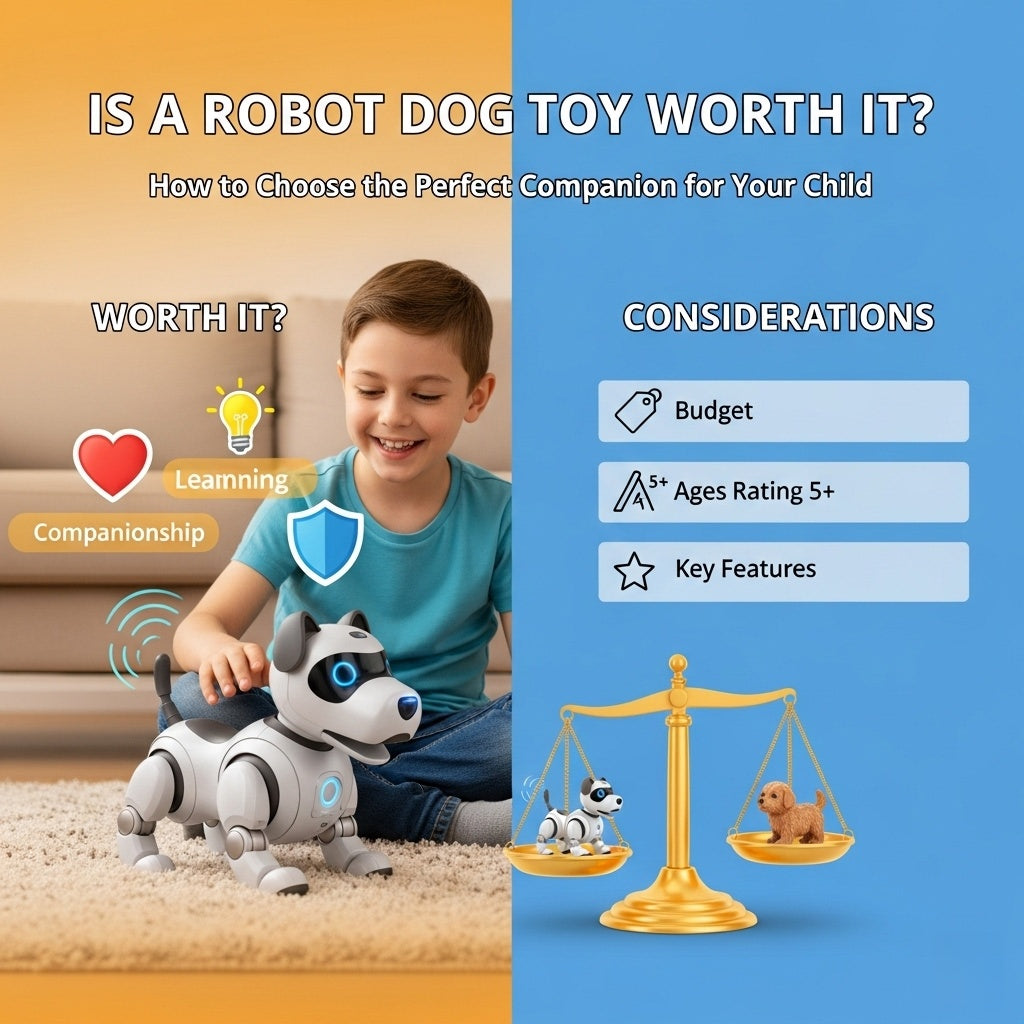
Is a Robot Dog Toy Worth It? How to Choose the Perfect Companion for Your Child
August 29, 2025
If your child wants a puppy but you're worried about allergies or the commitment, a robot dog offers a solution. This article explores the benefits and drawbacks of interactive robot dogs, highlighting their educational, emotional, and practical value. It also provides a detailed buyer's guide to help you choose the right model based on budget, age, and key features.

Is a Robot Dog Right for You? The Adult's Guide to Robot Pet Ownership
August 29, 2025
A robot dog can be a great fit for busy schedules or for those with pet allergies—as long as you remember it's a piece of tech, not a living being. This guide helps you figure out if a robotic companion suits your life, featuring the latest models like Sony’s Aibo, Keyi Tech’s Loona, and Petoi’s Bittle. We’ll walk through benefits, drawbacks, ideal users, and key buying tips to offer straightforward advice on whether this tech is right for you.
Key Considerations Before Buying
Fit for Lifestyle: Perfect if you want companionship without the high care of a real pet. Not ideal if you enjoy an animal's spontaneous behavior.
A Few Downsides: The higher price tag and its mechanical nature might not meet everyone's expectations.
Key Benefits: Many find it supports well-being, offering stress relief or companionship for older adults.
Common Questions Addressed
Many people ask if a robot dog is just a toy. While simpler models can feel like novelties, high-tech options like Sony's Aibo or Loona provide a surprisingly realistic pet-like experience. They won’t replace the unpredictable nature of a living animal, but they offer real companionship without the chores of walking or vet appointments. Disappointment usually comes from unclear expectations—tech fans enjoy customizable features, while others prefer models with more personality.
Top Recommendations by User Type
Based on user reviews, tech lovers often choose programmable models like Petoi Bittle (around $269–$339). Those wanting companionship might prefer interactive bots like Loona ($399–$500). Therapeutic models, like as Tombot's Jennie, are popular for their low upkeep. Always check the latest pricing and specifications on official sites.
Adult robot dogs have progressed beyond novelty status. They now provide companionship, amusement, and even therapeutic support. They can give emotional consolation without the duties of a real pet, but they are not a full replacement.
Does a Robot Dog Fit Your Lifestyle?
Robot dogs offer adults companionship without the work, but they fit best if you prefer convenience over a real animal. If you're asking, "Is it just a toy?"—that depends. Simple models feel like gadgets, but high-end ones can seem surprisingly real.
As for replacing a real pet? Not entirely, since it can’t form a true bond. But it’s a great alternative where pets aren’t allowed or for people with allergies.
Will you regret buying it? You might if you expect too much emotionally or overlook the cost, but most happy owners went in with realistic expectations.
Pros: Why You Should Consider Getting One
Robot dogs are a great solution for those who cannot keep real pets, offering a unique mix of smart tech and companionship.
Low Maintenance: They don't need food, vet visits, or walks. Just charge—most offer 2-4 hours of fun per charge. This makes them perfect for busy work or travel, providing a hassle-free way to enjoy some pet-like joy.
Emotional Companion: As a therapeutic robot dog or robot pet for mental health, they provide interaction that combats loneliness. Models like Tombot's Jennie are designed for the elderly, reducing agitation in dementia patients through responsive behaviors like tail wags and sounds. Studies show they lower stress and foster connections, especially as companion robots for elderly individuals.
Cons: Things to Know Before You Buy
While fun, robot dogs have downsides that may cause regret if not considered.
High Cost: Basic models start at $100, while advanced versions like Aibo may cost over $2,900, plus additional expenses. Remember that this is a serious investment, not a play.
Not a Real Pet: They repeat pre-set actions and can’t offer real emotions or surprises. This may leave owners wanting a deeper bond, leading to boredom.
Tricky Setup: Some require assembly or app pairing. Units that need coding can be frustrating for those not comfortable with technology.
A comparison table below highlights these aspects across popular models:
Model
Pros
Cons
Battery Life
Price Range (2025)
Sony Aibo
Lifelike AI, learns behaviors
High cost, subscription needed
2-3 hours
$2,900+
Loona
Interactive, affordable AI
Limited autonomy
2-4 hours
$399-$500
Petoi Bittle
Customizable, educational
Assembly required
1-2 hours
$269-$339
Tombot Jennie
Therapeutic focus, realistic
Less interactive for fun
4+ hours
$449 or higher
This table, based on reviews, helps visualize trade-offs
What Type of "Robot Owner" Are You?
Segmenting by user type ensures a better match. Busy professionals might prioritize ease, while others seek depth.
Tech Enthusiast/Maker
Needs: You crave hands-on involvement, coding, and customization to explore robotics.
Recommended Type: Opt for open-source like Petoi Bittle, which requires assembly and supports programming in languages like Python. It's a hobbyist's dream, allowing modifications for unique behaviors. Price: Around $236. For visuals, picture a disassembled kit transforming into a agile robot dog—check unboxing videos for inspiration.
Companion Seeker
Needs: Emotional interaction is key, perhaps as a robot pet for mental health or companion robot for elderly.
Recommended Type: AI-driven models like Loona or Aibo emphasize personality, with voice commands and responsive play. Loona, at $399, offers ChatGPT integration for conversations, making it a solid therapeutic robot dog. For elderly users, Tombot's realistic robot dog provides comfort without complexity.
Minimalist/"Chilled" Owner
Needs: Simple setup, no fuss—just occasional fun.
Recommended Type: Entry-level like Joy for All or basic AI pets for adults. These are plug-and-play, with minimal tech requirements, perfect for relaxed enjoyment. Cost: $100-$300.
Another table for quick segmentation:
Owner Type
Key Need
Top Pick
Why It Fits
Tech Enthusiast
Customization & Learning
Petoi Bittle
Programmable, educational
Companion Seeker
Emotional Bond
Loona/Aibo
Interactive, personality-rich
Minimalist
Ease of Use
Joy for All
Hassle-free, affordable
Practical Questions to Ask Before Buying
Before shopping for a robot dog, figure out what you really want. Options range from simple toys to high-tech partners and work tools. Asking yourself a few key questions first will help you find the right match.
What's the main purpose?
First, figure out what you'll use it for most. Is it for:
Companionship and fun? These bots act like interactive pets for people or families. They can learn your habits, recognize who you are, and provide comfort. Check out models like the Sony AIBO, Tombot Jennie, or KEYi Tech's Loona.
Education and learning? These usually come as build-it-yourself kits. They're perfect for teaching STEM through coding, often using Python. A great option to look at is the Petoi Bittle X.
A simple kid's toy? These are the most affordable, with basic actions like responding to a remote or touch. Popular choices are from brands like Zoomer and WowWee's Dog-E.
Professional or research work? These are advanced, high-cost machines built for jobs like security or data collection. The most famous example in this class is Boston Dynamics' Spot.
What's your budget?
Robot dogs come at many prices. You can find simple toys under $100 or advanced models that cost thousands. Decide what you want to spend. Remember to include extra costs like subscriptions or add-ons.
Basic toy models: $40 to $200.
Mid-range for learning or companionship: $300 to $1,500+.
Advanced AI partners: From $3,000 upward. Some, like Sony’s Aibo, need regular subscription payments.
What features matter most?
Consider what you want your robot dog to do.
Interaction: Does it recognize commands or touch? Can it adapt to your habits?
Movement: Does it offer realistic walking or roll on wheels? Is it only for smooth surfaces or can it handle stairs?
Battery: What is the typical battery life? Can it return to its charging dock on its own?
Who made them?
Once you know what you need, focus on the brands that lead in that area.
For companionship: Top picks include Sony (AIBO) and KEYi Tech (Loona).
For education: Petoi is a great choice for popular DIY kits.
For fun: Brands like WowWee offer playful, interactive robot pets.
Beginning your search with a clear goal helps you quickly find the ideal robot dog for you.
What’s the Real Maintenance Like?
Far less than a live pet: Just plug it in every few hours, wipe it down with a dry cloth (keep water away from the electronics), and run app updates. There’s no fur to groom or mess to clean. For therapy use, disinfect it regularly, particularly in group environments. Expect 1-4 hours of use per charge.
FAQ
Q: What is the most advanced robot dog in the world?
Boston Dynamics' Spot is the best option for industrial application; it is acclaimed for its durability and ability to tackle all types of difficult terrain.
Unitree Go2 offers high-performance at a reasonable price. It has amazing speed and an impressive ability to do flips and other tricks.
Q: Is there such a thing as a robotic dog?
Yes, robot dogs exist. They are robots that appear and act like actual dogs, and they have two major applications:
For work: Robots like as Spot from Boston Dynamics are utilized in dangerous environments such as building sites to perform tasks that humans cannot.
Just for fun: Robots such as Sony's Aibo are designed to be companions and may function as a pet for humans at home.
Q: What's the best humanoid robot?
The best humanoid robot depends on its job.
For factory work: Tesla Optimus and Figure 01 are top choices. They're built to be affordable and work alongside people in manufacturing plants.
For physical feats: Boston Dynamics Atlas is unmatched. It's famous for its athletic abilities and is now being designed for heavy lifting.
For social interaction: Engineered Arts Ameca is the best. It has a very realistic face and can have conversations, making it great for customer service.
Q: Do AI robots have feelings?
AI robots do not have feelings.
They can act as if they had feelings by responding to you through their programming, but they don't. Their actions are based on code and statistics, not on genuine feelings like happiness or grief.
Q: What does the aibo robot dog do?
The Aibo robot dog is a smart toy that behaves like a real dog. It could:
Learn and develop a personality based on how you interact with it.
Walk and behave like a real dog by wagging its tail and responding to your touch and voice.
See, hear, and feel its environment, allowing it to identify its location and recognize faces.
Be a delightful companion for those who desire a pet without the hassle.
Final Tip
Assess your needs—tech hobby, emotional aid, or simple fun—and test via reviews or demos. With thoughtful choice, a robot dog can enrich your lifestyle without regrets. For more, explore the citations below.
Conclusion
Robot dogs for adults offer low-maintenance companionship, educational value, and emotional support, but come with high costs, limited realism, and potential tech hurdles. They're excellent as interactive robotic pets for adults or companion robots for elderly, yet can't fully replicate real pets.
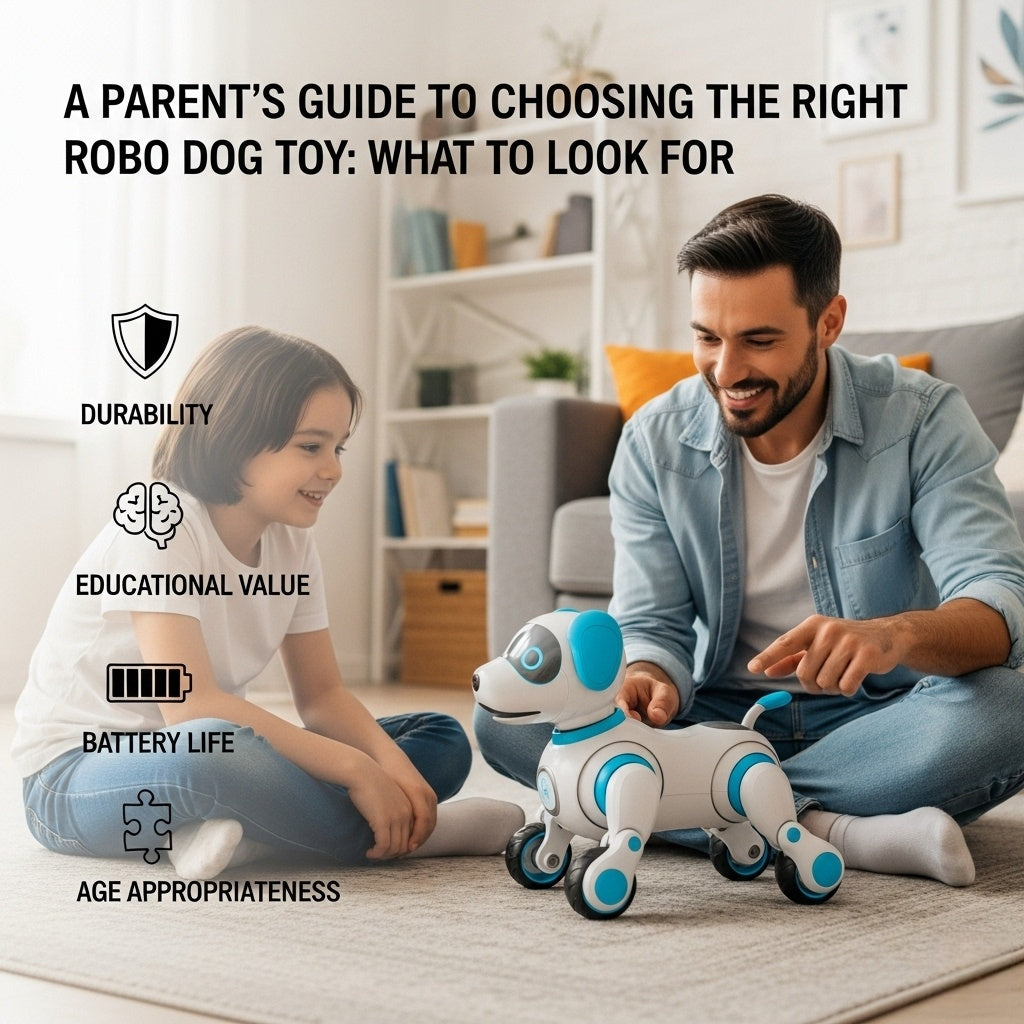
A Parent's Guide to Choosing the Right Robo Dog Toy: What to Look For
August 29, 2025
Hey there, fellow parent! You and I both know the drill—our kids spot a fluffy puppy in the park and suddenly it's all "Mom/Dad, can we get one?" But between allergies, busy schedules, and the chaos of real pet care, a robo dog toy steps in like a superhero. These interactive robot dogs, electronic pet dogs, and robot puppy toys aren't just playthings; they're gateways to learning, sparking curiosity in tech and responsibility without the midnight walks.

Top 5 Puppy Dog Robots for Kids and Adults: Which One Should You Get?
August 29, 2025
Robotic pets are growing more popular as interactive friends. They provide the happiness of a pet without real animal care. Advanced models, such as the Sony AIBO, exhibit realistic behavior, whilst more affordable options, such as the Zoomer amusing Pup, provide youngsters with amusing antics. High-end robots are better suited for long-term companionship, although mid-range and low-cost models may be a better fit for recreational use.
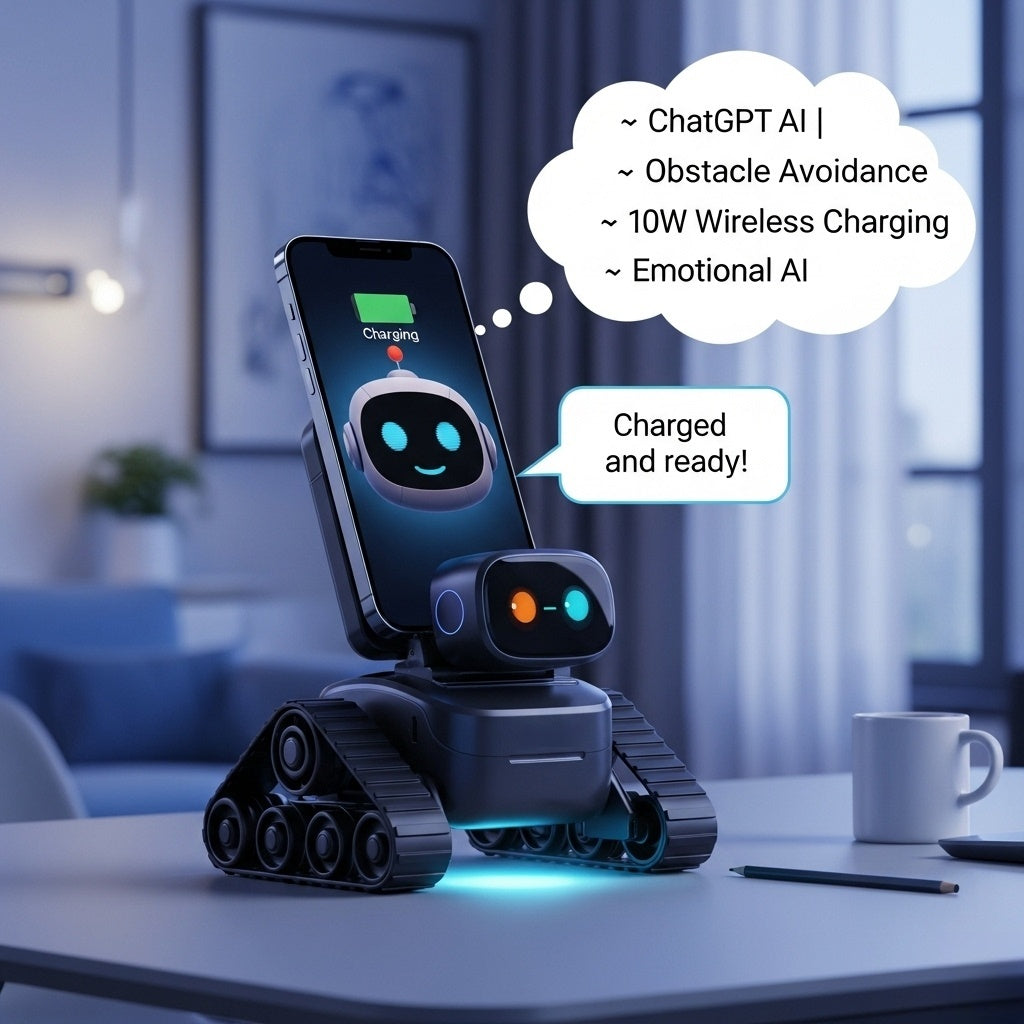
Robot Review: Does the LOOI Phone Charging Robot Actually Work?
August 29, 2025
LOOI does "work" as advertised—a charming phone charging desktop robot that adds personality to your workspace. 110x98x110 mm frame and 385 g weight; can charge iPhone 12 and up. Perfect for tech fans, families, and remote workers who want something fun for their desk.